



Annaffiare le piante con acqua minerale
di lettura
Do you have some water left in a bottle on your nightstand? Are you hesitant to throw away that sparkling water that has lost its fizz?
The natural reflex is to want your green plants to benefit from it. After all, if it's good for us, it's good for them, right? The answer is: Yes, but in moderation.
Mineral water is a powerful cocktail of nutrients. Used intelligently, it's a liquid fertilizer. Used in excess, it can become a salty poison for your roots. Let's separate fact from fiction.
1. Why is mineral water a "boost" for your plants?
Unlike tap water (often treated with chlorine) or demineralized water (devoid of everything), spring water is rich in elements that the soil loves:
- Magnesium: Essential for photosynthesis (this is what makes leaves nice and green).
- Potassium: Strengthens the plant against diseases.
- Calcium: Helps root development.
Using the last of a bottle of spring water (such as Cristalline or Volvic) from time to time acts as a natural nutritional supplement.
2. The Trap to Avoid: Salt Accumulation
This is the point most gardeners ignore. So-called "Mineral" waters (such as Hépar, Courmayeur, and some sparkling ones) are very rich in sodium (salt).
If you only water with this water:
- The plant drinks the water.
- Minerals that are too large remain in the soil.
- Salt accumulates and eventually burns the roots (reverse osmosis).
The unmistakable sign: A white or yellowish crust appears on the surface of the soil or on the edges of the pot. This is a sign of mineral overdose.
Precision is Key
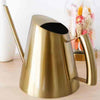
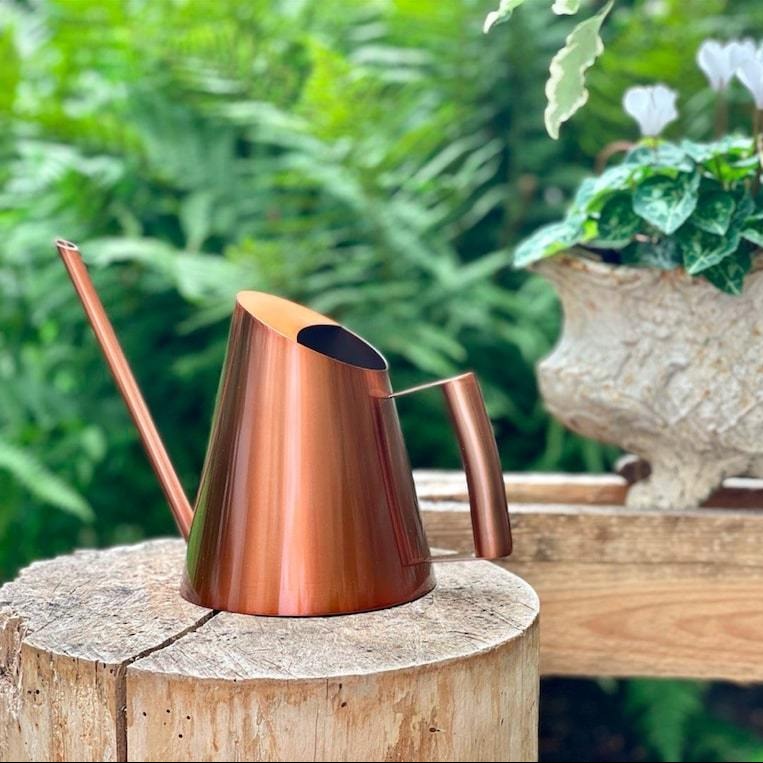
Mineral water should be an occasional addition, not a flood. To dose this "elixir" without saturating the soil, a precise tool is needed.
- 🎯 Fine Spout: Allows mineral water to be poured precisely at the base of the plant, without waste.
- ✨ Noble Material: The copper of this watering can recalls the purity of trace elements.
3. What about sparkling water then? (The secret tip)
It's an excellent idea, with one condition: Let it air out!
Sparkling water contains dissolved CO2 and many macronutrients (sulfur, phosphorus). A study has shown that sparkling water can accelerate the growth of green plants and make their foliage denser.
How to do it? Leave the bottle containing your leftover water open for 24 hours so that the aggressive gas escapes and the water reaches room temperature. This is particularly effective when sprayed on foliage (foliar fertilizer).
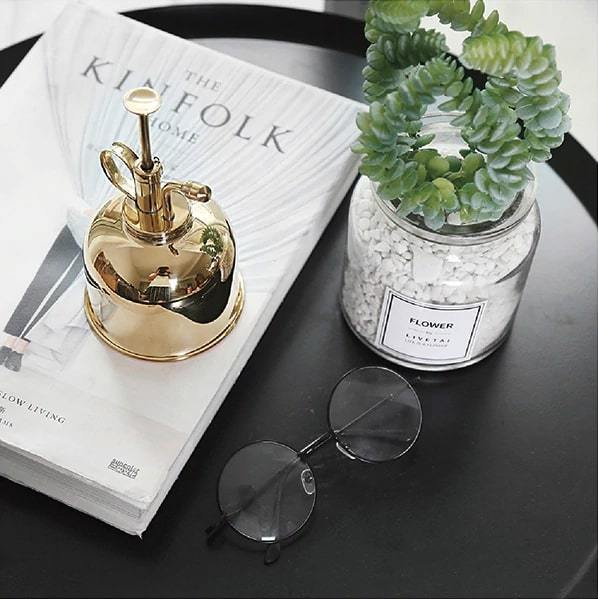
Boost the foliage
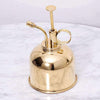
Use your leftover sparkling water (without bubbles) in a quality plant mister to nourish the leaves directly.
- 🌿 Direct Absorption: Leaves absorb minerals faster than roots.
- 💎 Durable Brass: An object designed to last, unlike plastic bottles.
4. The Best Water is Still Free: Rain
Let's be honest: buying bottled water for your plants is neither economical nor ecological. The queen of waters remains rainwater.
- It is soft (no limescale).
- It is at room temperature.
- It is charged with atmospheric nitrogen during thunderstorms.
A bucket on the balcony or a rainwater collector in the garden is enough. This is the water your plants have always been waiting for.
If you must use tap water, let it sit for 24 hours in your watering can for the chlorine to evaporate. It's simple and it changes everything.
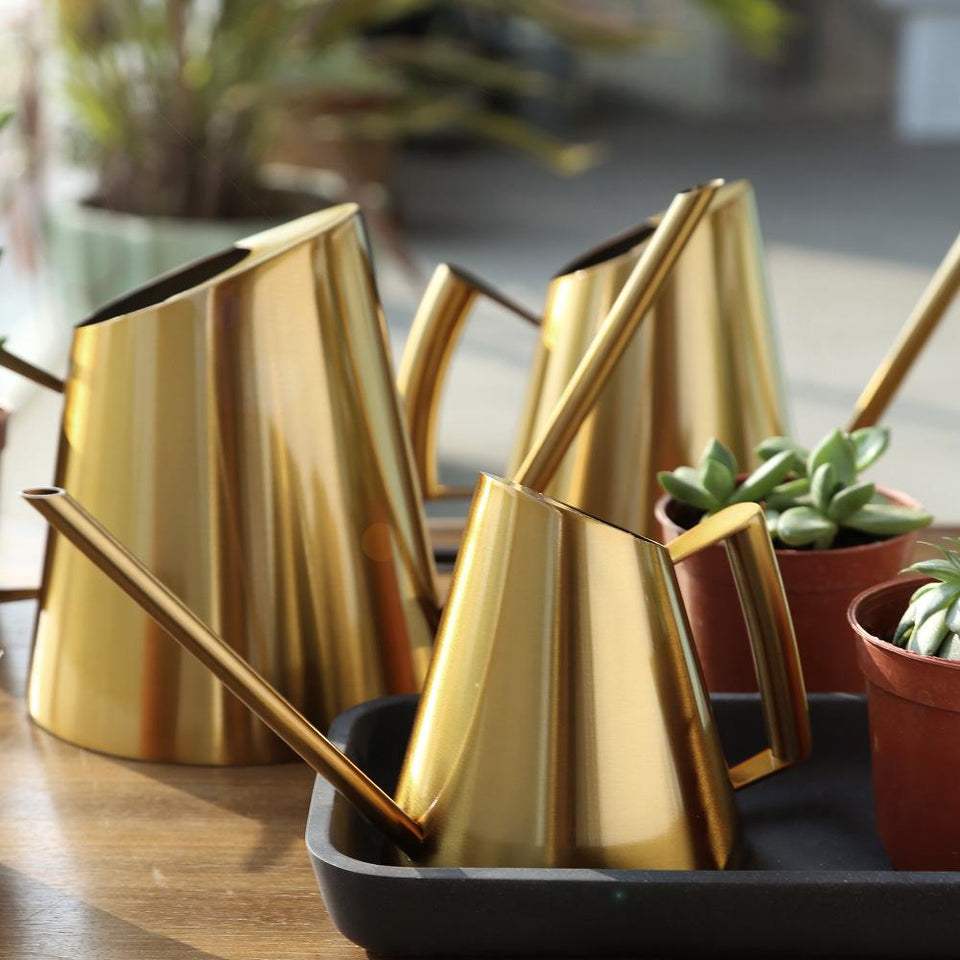
A stylish home for your rainwater
Have you collected this precious water? Serve it with elegance. Our golden watering can is a favorite among Scandinavian design enthusiasts.
- ✨ Rust-resistant: Perfect for storing rainwater or letting tap water stand.
- 🏆 Best-Seller: The perfect blend of style and function.
In summary
Yes to using the last of a bottle to avoid waste (it's a good supplementary fertilizer), but no to exclusive watering with mineral water.
Alternate, observe your plants, and most importantly: equip yourself with durable tools that make you want to take care of them.
View the Design Watering Cans collection
Degouey
Peut onarroser les orchidées avec de l’eau additionnee de moringa en feuilles . Merci