



Quando annaffiare il prato appena seminato?
di lettura
You've just sown your lawn and are wondering if you should water it right away? Should you flood it every day or let nature take its course?
The success of a lawn is determined in the first few days. Moisture triggers germination. If the seed dries out, it dies. If it sits in water, it rots.
In this guide, we answer the most frequently asked questions to help you achieve a dense, uniform, and green lawn, from sowing to the first mowing.
1. How often should you water a newly sown lawn?
Grass seed needs a stable environment to germinate. The soil must be kept constantly moist (like a wrung-out sponge) in the top 2 to 3 centimeters.
- Before sowing: Water the bare soil generously 48 hours before to create a deep reserve.
- After sowing (Days 1 to 15): This is the critical phase. Water 2 to 3 times a day in small quantities (5 to 10 minutes) so that the surface never dries out.
- After emergence: Once the grass reaches 3-4 cm, reduce the frequency but increase the quantity to encourage the roots to go deeper for water.
For more on general maintenance, see our complete guide to the frequency of garden watering.
2. Should you water in the morning or in the evening?
The worst time is midday: the sun evaporates the water before it can be used. Aim for the beginning or end of the day:
- In the Morning (The best): Between 6 am and 10 am. The water penetrates well and the foliage has time to dry, which prevents diseases.
- In the Evening (Good alternative): Between 5 PM and 8 PM. Ideal for limiting evaporation, but beware of cool nights which favor fungi if the grass remains soaked.
3. Can you walk on seedlings to water them?
Ideally, no. Each step risks displacing seeds or compacting damp soil, preventing roots from penetrating.
If you don't have an automatic system and need to do it manually, try walking on planks to distribute your weight, or use equipment that allows for watering from a distance.
The trick for bare patches and gaps
If you are simply repairing a bare patch or sowing grass on a balcony, do not use a powerful jet that will wash away the seeds.
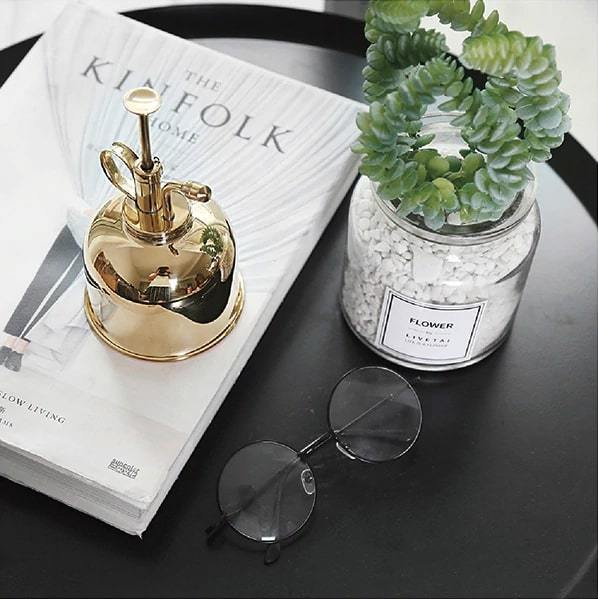
The secret tool for bare patches
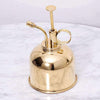
To germinate seeds in a small area (a repaired hole, a pot), a plant mister works wonders.
- ☁️ Zero Displacement: The mist moistens the seed without moving it.
- ✨ Precision: Ideal for delicate surface seedlings.
4. What equipment should you use?
Watering seedlings should mimic fine rain. A jet that is too powerful (Karcher type or simple hose) will dig holes and group all your seeds into piles.
For large areas (>50m²)
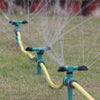
Automatic watering is almost essential. We recommend oscillating sprinklers that gently sweep the ground and allow time for the water to penetrate.
For urban gardens and manual watering
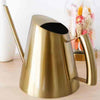
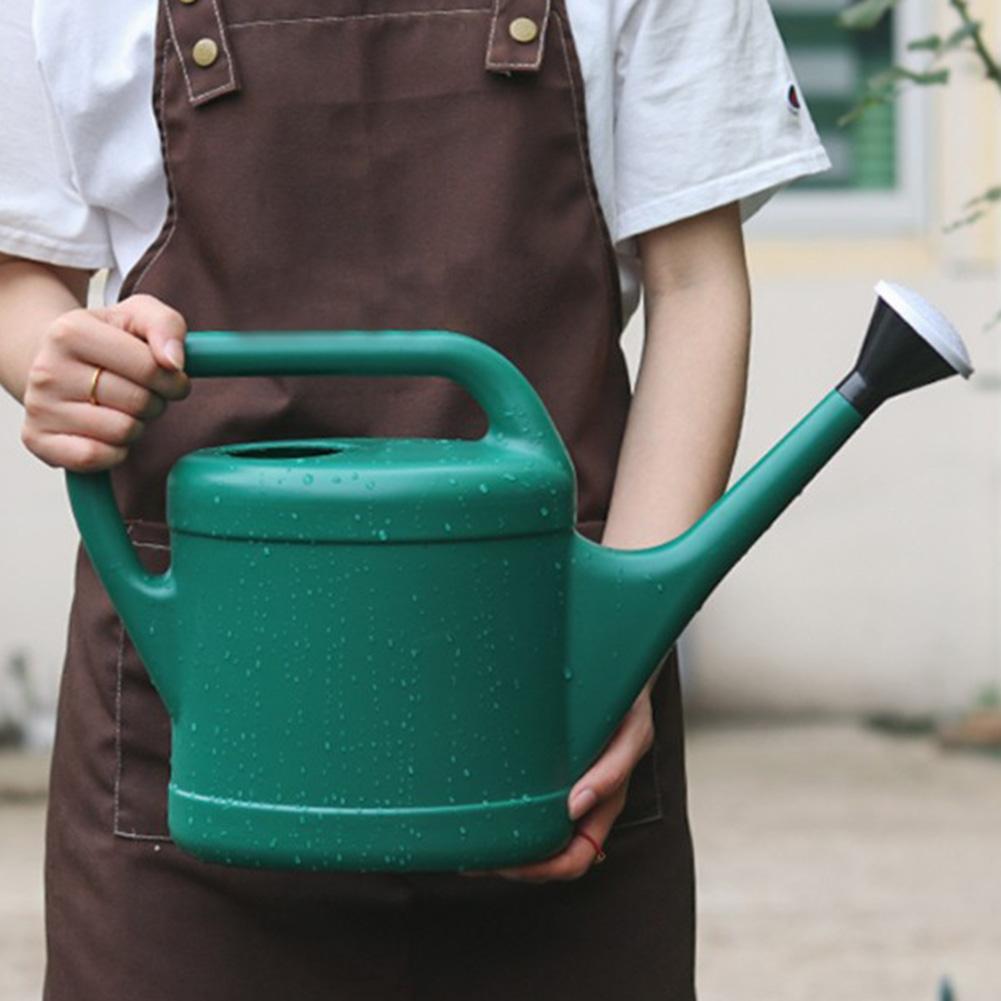
If you water by hand, forget fine-spouted indoor watering cans. You need a model equipped with a "rose" (the nozzle that diffuses the water) to soften the jet.
The Reference: The Parisian Watering Can
It's the gardener's essential tool. Its large capacity saves repeated trips, and its watering rose produces a gentle shower, perfect for seedlings.
- 🌧️ Watering rose: Does not damage fragile young shoots.
- 💪 Robust: Designed for outdoor use and UV resistant.
- 💧 Large Capacity: Ideal for quickly covering a lawn area.
5. What is the germination time for grass?
Don't panic if you don't see anything after 3 days! Germination time depends on soil warmth and variety:
- Ryegrass: Fast (4 to 8 days).
- Fescue: Slower (10 to 20 days).
As long as the grass hasn't sprouted, maintain frequent watering. It's an endurance race.
6. When to mow for the first time?
It's the beginner's mistake: mowing too early. Wait until the blades reach 8 to 10 cm high (usually after 3 or 4 weeks). The roots must be strong enough to withstand being pulled out by the mower.
Pro Tip: For the first cut, set the mower to the highest setting. Only cut the top third (the tips) to thicken the lawn without stressing it.
Patience and Regularity
A beautiful lawn requires attention in the first few weeks, but the result is worth it.
View Garden Watering Tools
Lenoble
J’adore bien explicit merci beaucoup.