



Annaffiare le piante con il tè
di lettura
Have you just finished your cup of tea, or worse, left it on the corner of your desk until it went cold? Whatever you do, don't throw it down the drain!
Rest assured, watering your plants with tea is not a crazy idea. It's a tip from an experienced gardener to boost the growth of certain plants without spending a cent on chemical fertilizers. Tea is rich in natural nutrients that your green plants will love.
But beware, not all plants like "Tea Time". Let's discover together how to transform your beverage into a growth elixir.
1. What does your cup of tea really contain?
Beyond its comforting taste, tea is an infusion of organic matter rich in valuable elements for the soil:
- Nitrogen (4.4%): It is the main fuel for leaf growth (present in much greater amounts than in some liquid fertilizers!).
- Potassium & Phosphorus: Essential for root vigor and flowering.
- Tannic Acid: It slightly acidifies the soil, which helps some plants absorb nutrients better.
In summary: It's a "gentle" fertilizer that nourishes the plant without risking root burn (unlike overdosed chemical fertilizers).

The "Tea Time" Watering Can
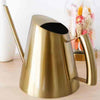
Since you water with tea, why not do it with style? This watering can in the shape of an English teapot is specially designed for your indoor plants.
- 🫖 Original Design: A chic nod to tea time.
- 💧 Long Spout: Ideal for pouring at the base of the plant without splashing.
2. The golden rules of tea watering
Before emptying your teapot, here are some essential precautions:
✅ What's good:
- Black, Green or White Tea: Any type is fine, as long as it's plain.
- Organic: To avoid adding pesticides to the soil of your plants.
- Cool Tea: ALWAYS wait until the tea reaches room temperature. Boiling water would instantly kill your plants.
❌ What to avoid:
- Sugar: It attracts gnats and promotes mold. If your tea is sweetened, drink it!
- Milk: As it rots, it releases bad odors. Keep that splash of milk for your own cup.
- Commercial Iced Tea (Ice Tea): Too much sugar and too many chemical preservatives. Avoid it.
3. How do you use tea? (3 Methods)
Method A: The Tea Left in Your Cup
This is the make-the-most-of-it method. Did you let your tea cool down? Simply pour it at the base of the plant (on the soil, not on the leaves). It's an immediate hydration boost.
Method B: The Watering Can Infusion (Our favorite)
Don't throw away your used tea bags! Soak them overnight in your watering can filled with water. The remaining nutrients will slowly infuse into the water.
The next day, remove the bags (compost them if they are plastic-free paper) and water as usual. It's a kind of "light tea" ideal for regular use.
Method C: Burying
If you use loose tea or 100% biodegradable bags (staple-free, plastic-free), you can bury the damp bag directly in the soil. It will serve as a slow-release fertilizer as it decomposes.
Infuse with elegance
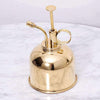
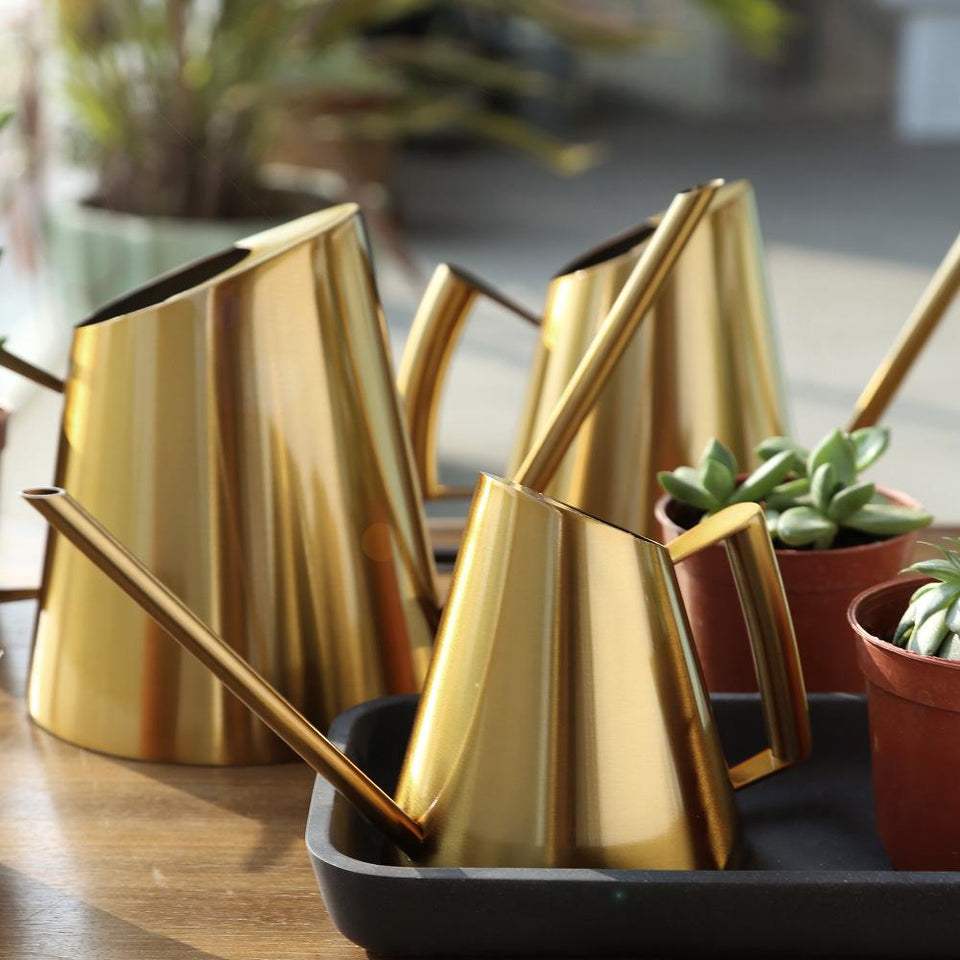
To practice the infusion method, you need a proper watering can. Our gold-coloured model is perfect for letting your preparation rest overnight on a shelf.
- ✨ Rust-Resistant: Withstands the acidity of tea (unlike plain zinc).
- 🏆 Best-Seller: The decorative accessory that transforms the chore of watering into pleasure.
4. Which plants like tea? (Acid-loving plants)
Tea contains tannic acid, which lowers the soil's pH (making it more acidic). This is fantastic for so-called "acid-loving" or tropical plants, but less suitable for those that prefer lime-rich soil.
✅ The "Tea Team" (They love it):
- 🌿 Ferns
- 🌸 Orchids
- 🌺 Azaleas & Hydrangeas
- 🍅 Tomatoes (in the garden)
- 🌱 Philodendrons
- 🌵 Christmas Cactus
Friendly tip: Don't give tea with every watering. Once a month is an excellent frequency for boosting your plants without upsetting the soil's balance.
To your health (and that of your plants)!
Natural gardening is an exciting adventure. Recycling your tea bags is a simple gesture that benefits your "indoor jungle."
Want to go further? Discover all our accessories to pamper your plants.
View the Design Watering Cans collection
Magali
Quel sont les plantes a fleurs ou pas a qui on doit pas mettre le thé en vrac autour des racines ou a l intérieur de la terre merci
Marcella
Bonjour, en déposant des feuilles de thé qui ont déjà infusé sur le terreau de mes plants en pot, cela crée des moisissures à la surface du terreau. Est-ce néfaste pour les plantes ? Que faire ? Merci.
S adrapeau
Toute l’année, je ramasse le thé après son infusion pour le Kumbucha, le laisse sécher et l’utilise au printemps pour les hydrangésn (Hortensia). C’est du thé de Chine bio…. Ça vaut la peine de lui trouver un second usage.
Tardy
Merci pour toutes ces informations bien utiles
Par contre j’aurais souhaité savoir si le thé déjà utilisé, une fois séché était nourrissant également pour les plantes?
Merci dans l’attente de votre réponse
Cdt
Me Tardy
Laurence
Bjr
Merci pour ces conseils très judicieux.
Je voulais savoir. J’ai du thé noit que je n’aime pas. Il est en vrac.
Au lieu de le jeter, pourrais-je l’utiliser autour de mes plantes sans le faire infuser ??et si oui, quelle quantité mettre ?
Je vous souhaite une belle journée