



Come annaffiare un ibisco?
di lettura
Did you fall in love with this magnificent plant and its spectacular flowers, only to find its leaves turning yellow or, worse, its flower buds dropping before they even open?
Hibiscus is a demanding tropical plant. If it is thirsty, it wilts. If it gets too much water, its roots rot. The secret to continuous flowering lies in a subtle balance between watering the potting soil and maintaining air humidity.
Whether you grow it in the garden or in your living room, here is the complete guide to keeping your hibiscus happy and blooming.

1. Indoors: The Tropical Hibiscus (Rosa-sinensis)
This is the one often found at florists, with shiny leaves and vibrant colors (red, yellow, pink). It doesn't tolerate cold and lives in your living room or conservatory.

The "Wrung-out Sponge" Approach to Watering
In a pot, the soil dries quickly. Hibiscus needs potting soil that is always slightly moist, but never waterlogged.
- In summer: Water 1 to 2 times a week. Wait until the surface of the potting soil (2-3 cm) is dry to the touch before watering again.
- In Winter: The plant is dormant. Drastically reduce watering (once every 10-15 days is usually enough), just to prevent the root ball from drying out completely.
The secret to healthy buds: Air humidity
This is the most important point indoors. If the air is too dry (due to heating or air conditioning), the hibiscus becomes stressed and drops its flower buds before they open.
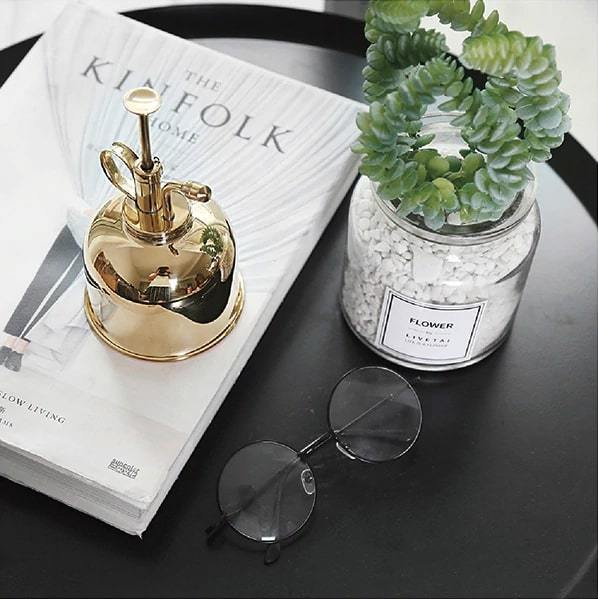
Save your flowers!
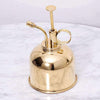
To recreate the tropical humidity it loves and prevent bud drop, mist the foliage (avoid open flowers) every 2 days.
- ☁️ Fine Mist: Hydrates the leaves without wetting your floor.
- 💎 Durable Brass: An elegant object to keep beside your plant.
2. For giant flowers: Feed it!
Producing such large flowers takes a lot of energy. Water alone is not enough: your hibiscus is a hungry plant.
From spring to late summer, add liquid fertilizer for flowering plants to the water you use for watering every 15 days. This technique is called fertigation.
Precision and Cleanliness
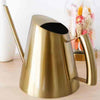
Water mixed with fertilizer can stain furniture. To pour the mixture directly at the base of the hibiscus without splashing, use a narrow spout.
- 🎯 Long Spout: Ideal for getting under low branches and dense foliage.
- ✨ Copper-coloured Stainless Steel: A hygienic material that is easy to clean.
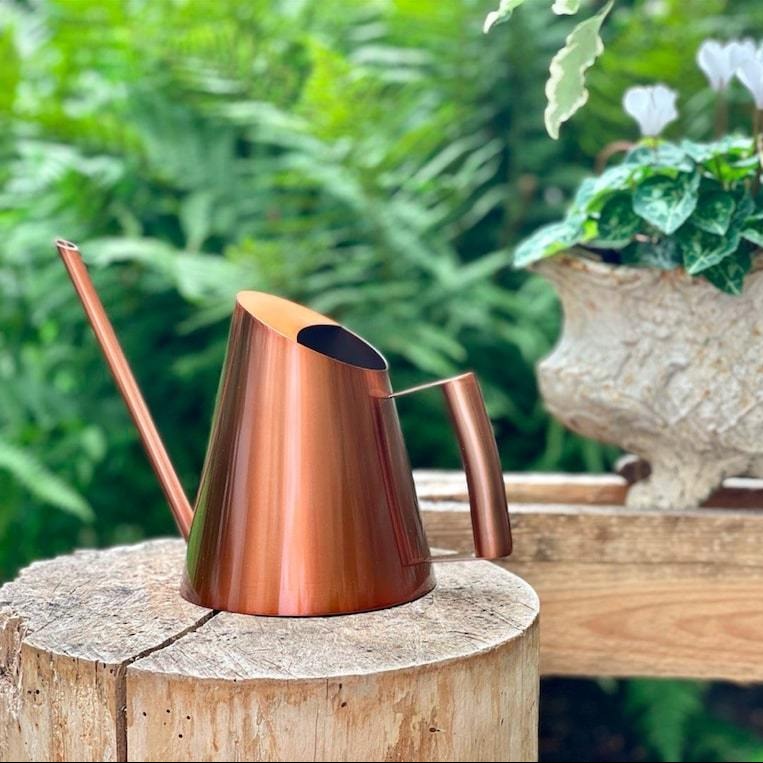
3. Outdoors: Rose of Sharon (Hibiscus Syriacus)
In the garden, hibiscus (often called Althea) is a hardy shrub that withstands frost. Its needs are different.
- The first year after planting: Water generously (at least 10L of water) once a week during the first summer to help the roots establish themselves deep in the soil.
- Once established (after 2 years): It becomes quite drought-resistant. Only water during a prolonged heatwave or if the leaves start to droop in the evening.

For thirsty shrubs
A garden hibiscus needs a large volume of water all at once to reach deep roots. The Parisian Watering Can is your ally.
- 💪 Large Capacity (11L): The perfect dose for a shrub in summer.
- 🌧️ Watering rose: Waters the soil without washing it away from the base of the plant.
4. SOS Hibiscus: Yellow Leaves and Wilting
Your plant is trying to talk to you:

- Soft, drooping leaves (as in the photo): It is very thirsty! Water immediately, ideally by soaking the pot (immerse it in a basin of water for 20 min).
- Falling yellow leaves: Often a sign of overwatering (suffocated roots) or a sudden change in temperature (a draft). Check that the pot drains well.
Which Water to Use?
Rainwater is ideal. If you use tap water, let it stand for 24h to allow the chlorine to evaporate. Hibiscus tolerates hard water but prefers slightly acidic water.
In Summary
Hibiscus is a rewarding plant if its tropical origins are respected: water for its roots, mist for its leaves, and fertilizer for its flowers!
Shop watering equipment