






Come raccogliere la rugiada del mattino?
di lettura
Looking for the secret to lush indoor plants without using chemicals? The answer might be on your lawn in the early morning.
Collecting morning dew is a time-honoured, economical and poetic practice. Above all, it is the best way to obtain pure, soft, lime-free water, a true elixir for tropical plants that are sensitive to the chlorine in tap water.
1. Why is dew "liquid gold" for your plants?
Dew is not rain. It forms when moisture in the air condenses as it cools at night.
Unlike tap water, which is often "hard" (containing limescale-forming minerals and chlorine), dew is naturally distilled water. It offers two major advantages:
- Zero white marks: It leaves no limescale deposits on the foliage after evaporation.
- Neutral pH: It respects the natural acidity of the soil, making it ideal for orchids, ferns or calatheas.

2. The "Bath Towel" Technique
There is a simple method to collect this water without complex equipment. The best time is at dawn, generally between 6:00 and 8:00 AM, before the sun evaporates all the dew.
What you'll need:
- A clean terry towel (or a large piece of cotton fabric).
- An untreated lawn or tall grass (avoid areas recently treated with pesticides).
- A clean container.
The Steps:
- Spread your fabric on the grass the night before, or drag it over the wet grass in the early morning.
- Let the fabric soak up the dew (cotton fibres absorb moisture by capillary action).
- Wring out the fabric over your container.
Note: The water may be slightly cloudy (soil or grass particles). That's okay! These organic residues are natural nutrients for your plants. No need to filter excessively.
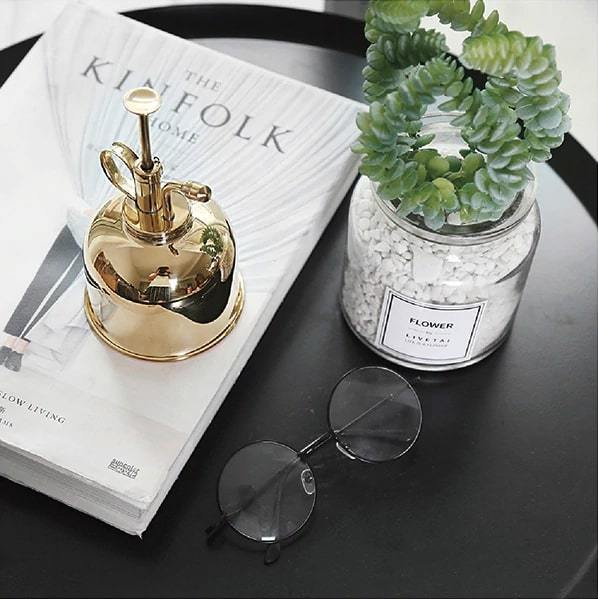
The ideal tool for dew water
Did you take the trouble to collect this pure water? Don't waste it by pouring it too quickly. Use it as a mist to imitate nature.
- 💧 Perfect Misting: Our mister transforms water into a light cloud, like natural dew.
- ✨ Corrosion-resistant brass: A premium material that withstands water and lasts a lifetime.
- 🌿 Leaf Care: Ideal for removing dust and hydrating plant pores.
3. How can you use the dew you collect?
Once your precious water is collected, you have two options:
Option A: Root watering (For purists)
Pour water into your watering can to hydrate the potting soil. This is excellent, but it requires collecting a lot of dew! Reserve this method for your smallest, most fragile plants (cuttings, bonsai).
Option B: Misting (The most effective)
This is the best use. In nature, dew settles on leaves. By using a sprayer, you reproduce this natural cycle.
Why does it work? Many indoor plants (especially epiphytes) absorb water through their foliage. Dew helps them stay supple and green and cope with the dry air in our homes.
The Subtle Beauty of Rose Gold
For your morning watering rituals, opt for a watering can that combines aesthetics and precision.
- 🌸 Unique Color: A fashionable rose-gold finish with a soft copper tone.
- 🎯 Long Spout: Reaches the centre of the plant without making a mess.
- 💧 Stainless Steel: Robust and lightweight.

Conclusion
Collecting morning dew is a simple gesture that reconnects us with the rhythm of nature. Even if the quantity collected is modest, the quality of this water makes it a true "spa" treatment for your favorite plants.
So tomorrow morning, don't forget your towel!
Langlais
Conseils utiles pour le maintiens des fleurs en pots