



Origini e definizione dell’annaffiatoio
di lettura
It may seem unremarkable, sitting at the back of the garden shed. Yet the watering can has evolved over the centuries, from a simple "animal skin" to a design piece proudly displayed in the living room.
Japanese, Parisian, Lyonnais... Each shape has a very specific function. Do you know which one is right for you?
Explore the history of an iconic tool and find out how to choose the right one.
1. Before the watering can: The Chantepleure
Before watering cans had spouts and handles, their medieval predecessor was the chantepleure. It was a terracotta sphere with holes in the base.
The clever principle: Dip it in water, cover the top opening with your thumb to hold the water inside through a vacuum, then lift your thumb over the plant to let the water fall like rain.

Today, watering cans offer greater precision and capacity.
2. In the garden: Parisian versus Lyonnais watering cans
For outdoor use, there are two main designs. These watering cans are built for capacity (5 to 10 litres) and durability.
The Parisian watering can (the modern favourite)
This is the familiar design. Its defining features are a removable watering rose and an ergonomic top handle that helps you balance it when full.
The benchmark design
The Parisian watering can is an essential gardening tool. It is sturdy and stable, with a rose that delivers a gentle shower without compacting the soil.
View the Parisian Watering Can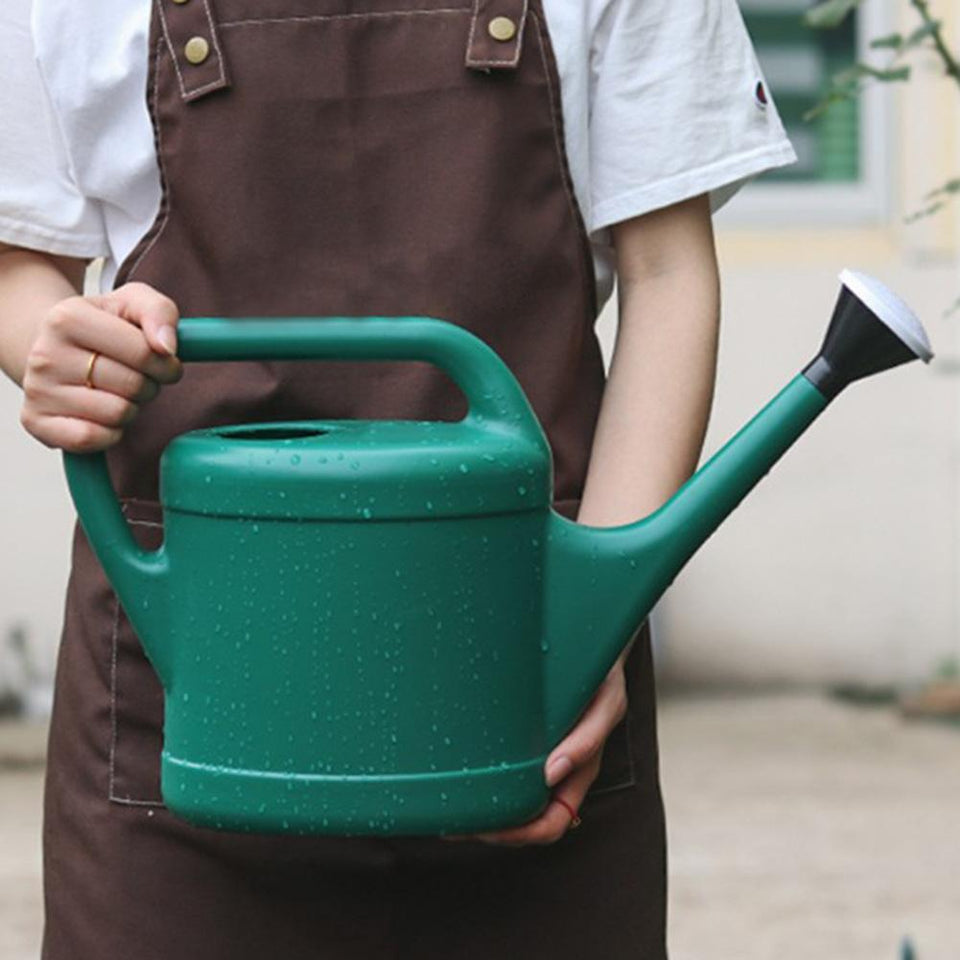
The Lyonnais watering can (the vintage option)
Less common today, this design resembles a large demijohn or milk churn. It is valued for its retro look, but is often less convenient to pour from than the Parisian design.

3. Indoors: The Japanese Heritage
While garden watering cans are large and short, indoor watering cans are slender and long. Why?
This shape comes from the traditional copper Japanese watering can used for bonsai. The very long spout lets the water build up speed to deliver precisely directed pressure.

The Copper Problem (and its solution)
A traditional Japanese copper watering can costs a fortune and oxidises (turns green) unless polished every week. That is why we created a modern version.
Japanese Style, without the maintenance
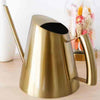
Enjoy the look of copper and the precision of a long Japanese-style spout, but in stainless steel. It does not rust or tarnish, and remains affordable.
- ✨ Design: A work of art for your living room.
- 🎯 Precision: Ideal for indoor plants with dense foliage.
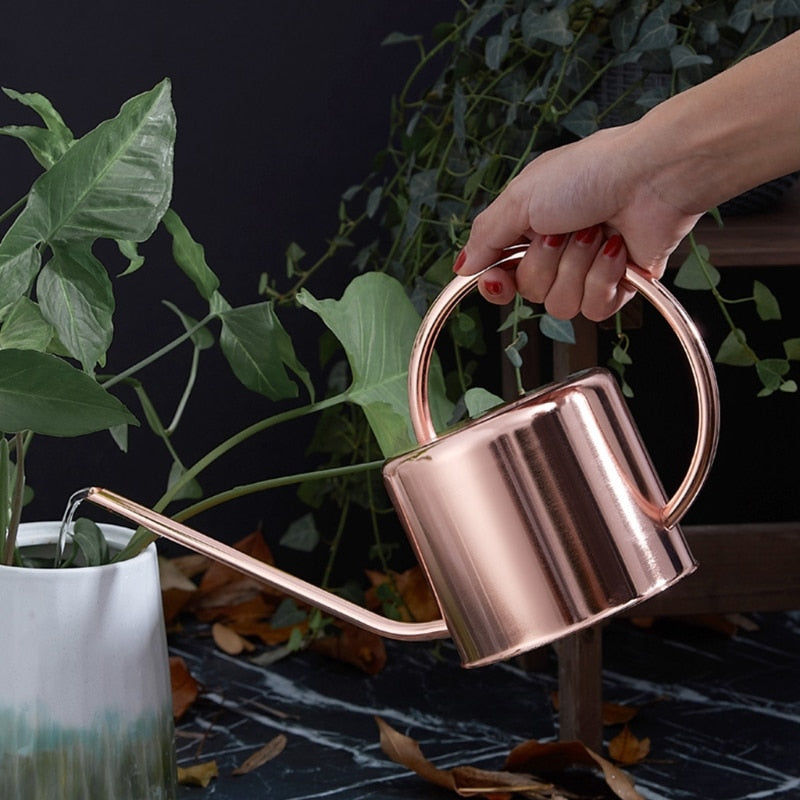
4. Innovation: the watering can that works on its own
The story does not end there. Today, watering can take care of itself. That is the principle behind ollas (also called oyas).
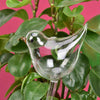
These microporous terracotta reservoirs are placed directly in the soil. Water slowly seeps through their walls, keeping the plant watered continuously without excess. This is the most environmentally friendly and safest technique for your plants.
What's your style?
Whether you are a practical gardener drawn to the Parisian design or a design lover who prefers the Japanese style, there is a watering can to suit the way you garden.
Visit the shop
Despont
Beaucoup d’arrosoir « Parisien » (je n’ai jamais utilisé que ceux là) ont une contenance de 11 litres. Pourquoi cette contenance sommes tout particulière ?