



Bisogna annaffiare il compost?
di lettura
Does your compost pile look like a dry bale of straw or, on the contrary, a foul-smelling sludge? The balance is subtle.
For the magic to work and your peelings to turn into black gold (humus), microorganisms need to drink. But be careful: good compost should have the consistency of a wrung-out sponge.
How often should you water? What water should you use? How do you manage moisture in summer and winter? Here are the golden rules for successful fermentation.
1. Why should you water your compost?
Composting is the work of billions of bacteria, fungi, and small insects. Like us, these unsung workers need water to live and "eat" your waste.
- Too Dry: Bacteria die of thirst, the process stops, and you end up with intact dead leaves after 6 months. Ants can invade the pile.
- Too Wet: Air no longer circulates. Bad bacteria (anaerobic) take over, creating methane and rotten egg smells.
2. The Sponge Test (The 40-60% Rule)
How do you know if you need to get out the watering can? Do the handful test (wear gloves!):
Take a handful of compost and clench your fist:
- If water flows: It's too wet! Add dry materials (cardboard, dead leaves) and aerate.
- If the handful crumbles and doesn't hold: It's too dry! You need to water.
- If the handful remains compact without dripping: It's perfect.
3. How do you water a compost pile effectively?
The classic mistake is to pour a bucket of water all at once. The water will create preferential paths and flow straight to the bottom without wetting the entire mass.
Water as a fine spray while turning the pile to thoroughly soak the layers.
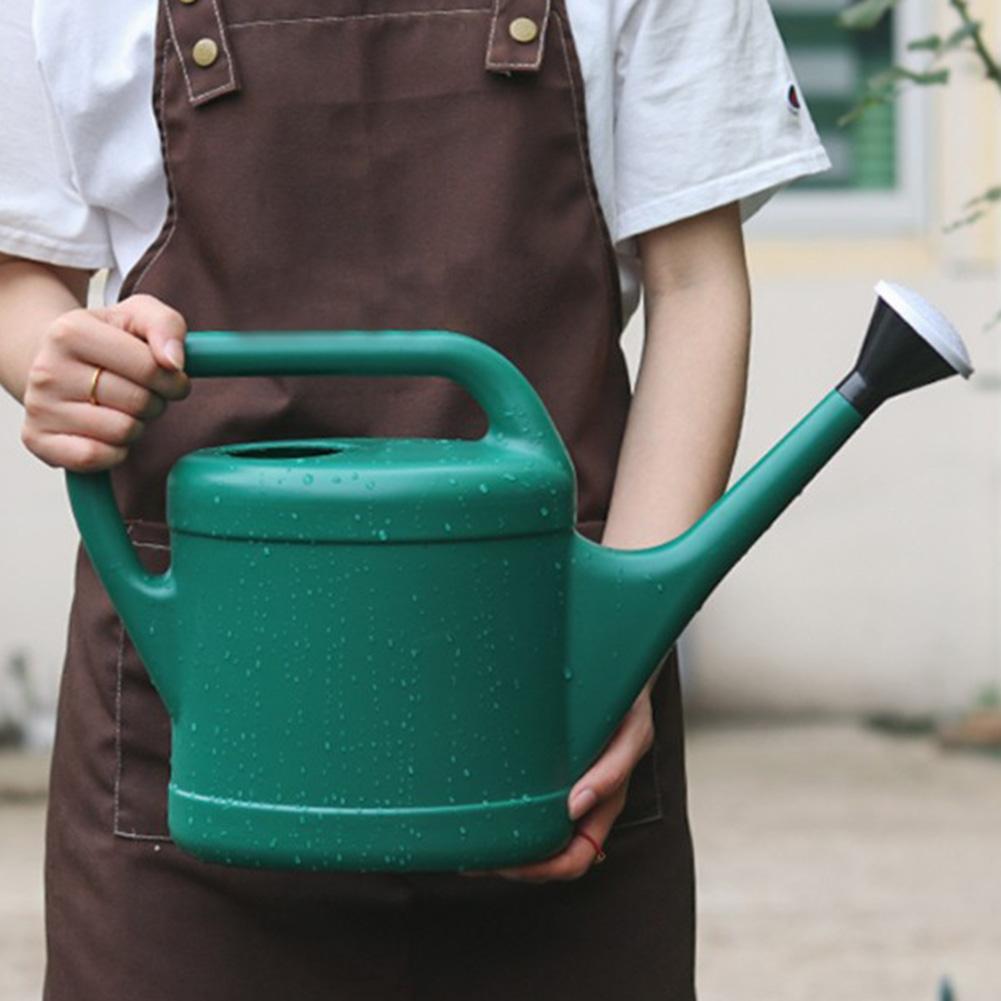
The Compost Ally: The Parisian Watering Can
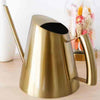
To moisten a compost pile, you need volume and gentle water distribution. The Parisian watering can is the ideal tool.
- 🌧️ Watering rose: Mimics rain for even moisture distribution.
- 💪 Large Capacity (6L or 11L): Avoids back and forth trips to the tap.
- 🛡️ Robust: Thick, UV-treated plastic that can stay outdoors next to the composter.
4. What about indoor composting (vermicomposting)?
If you compost in the city with a vermicomposter (worms that eat your waste), the rule changes. Worms are very sensitive to drowning.
Never use a watering can here. If the medium dries out (often in summer or if you add too much cardboard), you need to add moisture in the form of mist.
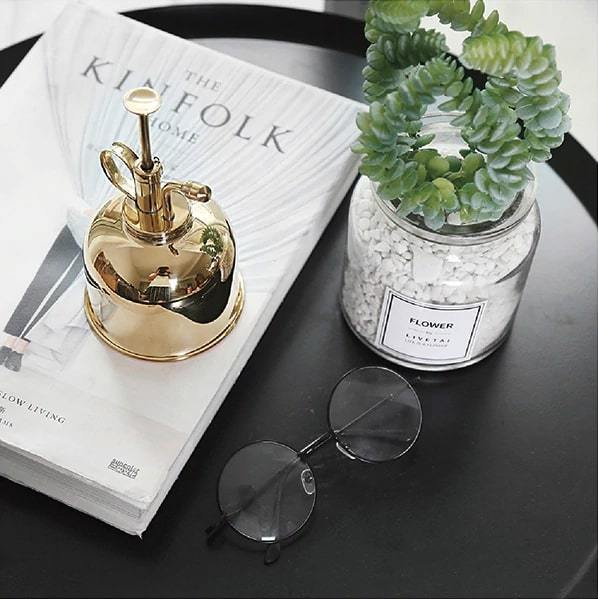
The savior of your worms
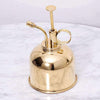
To rehydrate your worms' bedding without drowning them, a mister is essential.
- ☁️ Micro-misting: Moistens cardboard and surface waste.
- ✨ Aesthetics: If your composter is in the kitchen, your tool must be beautiful.
5. The alternative to watering: The Green/Brown Balance
The best way to avoid watering is to balance your inputs:
- The "Green" (Wet) Materials: Fruit peels, fresh grass clippings. They provide water.
- The "Brown" (Dry) Materials: Cardboard, dead leaves, straw, egg cartons. They "sponge up" the excess.
If your compost is too dry, add peelings (melon, zucchini...). If it's too wet, add shredded cardboard.
6. Bonus: What should you do with "Compost Juice" (Leachate)?
If your compost is working well (especially closed models), you will collect a dark liquid at the bottom: "Compost Tea".
It's a super powerful fertilizer! Don't throw it away. Dilute it to 10% (1 volume of juice to 10 volumes of water) and use it to water your houseplants. It's a natural growth booster.
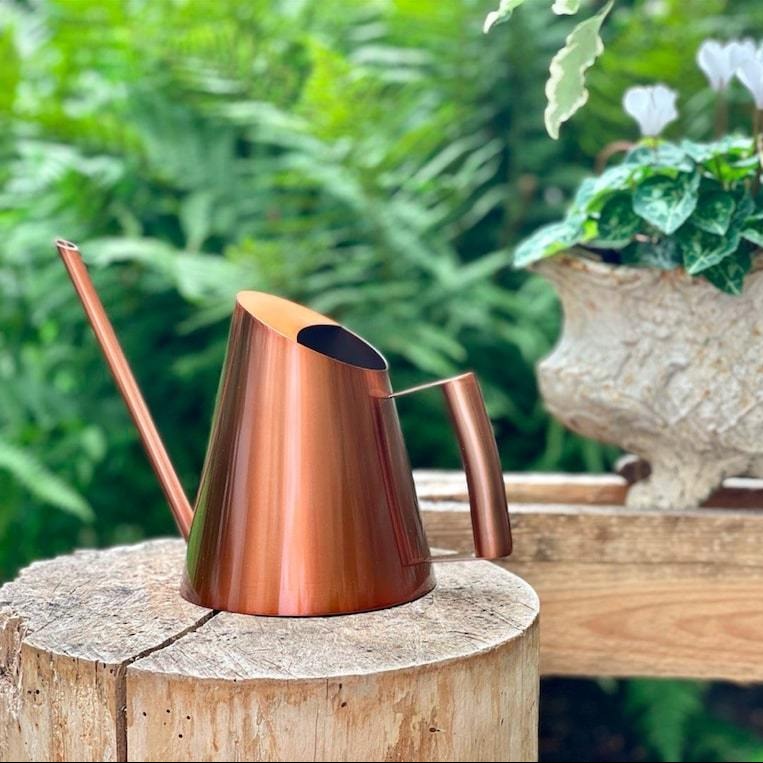
Distribute your "Liquid Gold"
Compost tea stains and smells strong. To apply it at the base of your indoor plants without getting it on the carpet, precision is needed.
- 🎯 Fine Spout: Pour the diluted fertilizer directly into the soil.
- 💎 Fine Material: Copper withstands the acidity of compost juice.
The Life Cycle
Watering your compost means nurturing the life that will later feed your plants. It's the gardener's virtuous cycle!
Equip yourself for the garden