







When to Water a Cactus?
of reading
It is often said that the Cactus is the immortal plant, the one you cannot kill. That's false!
Paradoxically, most indoor cacti die... drowned. Accustomed to arid environments, they store water in their tissues (succulents) to survive.
But "drought-resistant" doesn't mean "water-free." Here's how to find the perfect balance to make your thorny plants bloom.

1. Understanding the cycle: Summer vs Winter
The secret lies in the calendar. Your cactus does not live the same way all year round.
Spring / Summer (Growth)
It's the active season. It's thirsty! Water as soon as the soil is dry (about once a week if it's hot). Watering should be generous: water must drain through the pot.
Autumn / Winter (Rest)
As soon as the days shorten, the cactus sleeps. Its metabolism stops. Water must be drastically reduced (maximum once a month, or even stopped completely if the room is cool). If you overwater it in winter, it will rot.

2. How to water without rotting?
The body of the cactus (stem or pads) hates stagnant moisture. If you pour water on it, you risk creating brown spots or rot.
The Golden Rule:Aim for the soil, not the plant. Water should go directly to the roots.
For this, you need precision tools.
The secret tool of collectors
For small cacti and succulents tightly packed in their pots, a watering can is sometimes too big. The solution? The Watering Pipette.
It allows water to be deposited drop by drop, exactly where needed, without wetting the plant's body.
View the Precision Pipette
3. Should you mist a Cactus?
Unlike tropical plants, cacti do not need ambient humidity. However, they have an enemy:the dust.
Dust accumulates between the spines and prevents the plant from capturing light. Once or twice a year, use a sprayer to "wash" your cactus and restore its shine. Do it in the morning so it dries quickly.
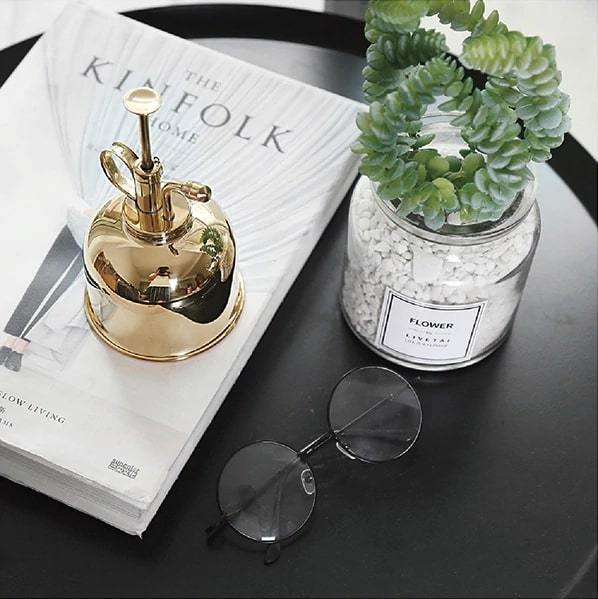
For a Vibrant Cactus
The brass mister is ideal for gently dusting your cacti without drowning the potting soil.
View Sprayer4. The unmistakable signs
Your cactus talks to you, learn to listen:
- It becomes soft, yellow or black at the base:It's rot! You've overwatered. Stop all watering, put it in the sun, and pray. If the base is black, it's often doomed.
- It wrinkles or shrivels:It's thirsty! It's drawing on its last reserves. A good watering (soaking) should re-inflate it in 24 hours.
- It leans towards the window:It seeks light. Rotate the pot regularly.
In Summary
The cactus loves extremes: a lot of water at once, then nothing for a long time. Be generous, but rarely.
Equipping for gardening