



Origins and definition of the Watering Can
of reading
We think it's mundane, sitting at the back of the garden shed. Yet, the watering can has crossed centuries, evolving from a simple "animal skin" to a design object proudly displayed in one's living room.
Japanese, Parisian, Lyonnais... Each shape has a very specific function. Do you know which one is right for you?
Dive into the history of a cult tool and a guide to choosing the right one.
1. Before the watering can: The Chantepleure
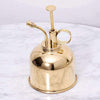
Before it had a spout and a handle, the ancestor of the watering can was called theWatering Spike(Middle Ages). It was a terracotta sphere pierced with holes at the bottom.
The brilliant principle:You dip it in water, block the top opening with your thumb to hold the water (by air vacuum), and then release your thumb over the plant to make the "rain" fall.

Today, the watering can has evolved to offer more precision and capacity.
2. In the Garden: The Parisian vs. Lyonnais Duel
For outdoor use, two schools of thought clash. These watering cans are designed for volume (5 to 10 liters) and robustness.
The Parisian Watering Can (The modern winner)
This is the one everyone knows. It stands out for itsremovable watering rose and its ergonomic top handle that allows it to be balanced when full.
The Absolute Reference
The Parisian Watering Can is the gardener's indispensable tool. Robust, stable, and equipped with a rose for a gentle rain that doesn't compact the soil.
View the Parisian Watering Can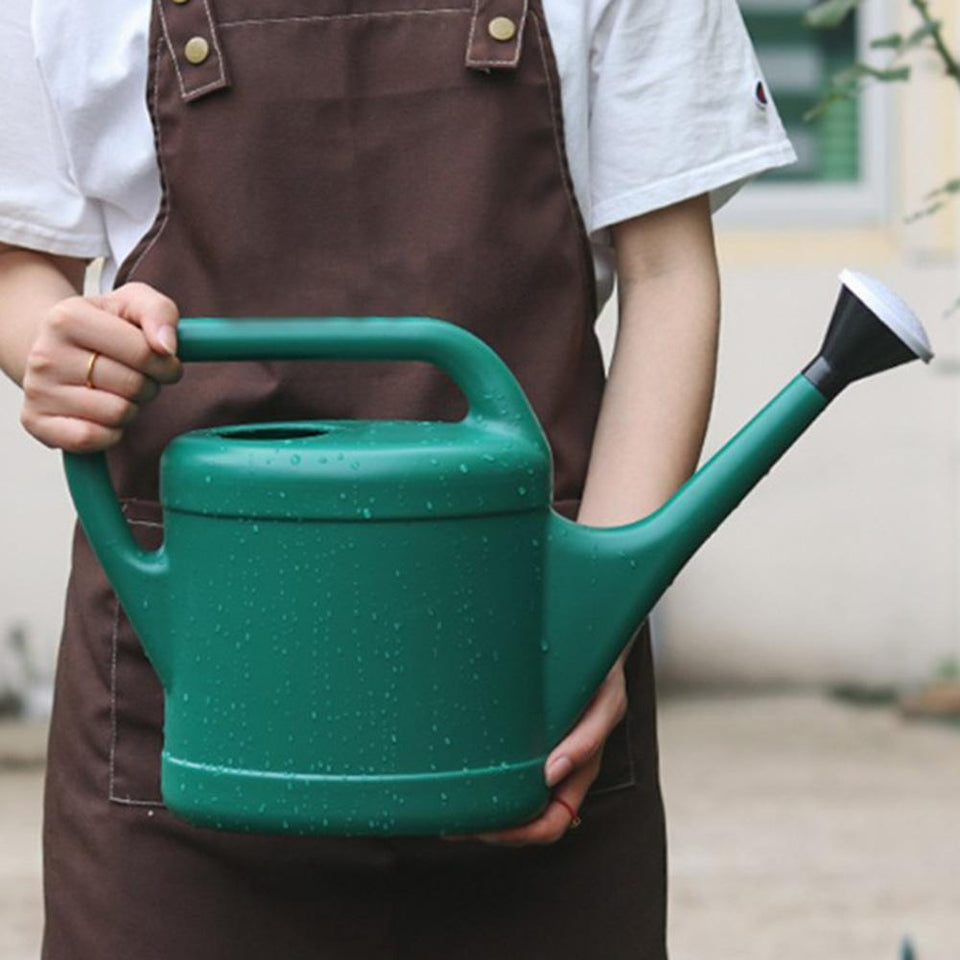
The Lyon Watering Can (The Vintage)
Rarer today, it resembles a large carboy or a milk jug. It is appreciated for its retro look, but often less practical to pour than the Parisian.

3. Indoors: The Japanese Heritage
If garden watering cans are large and short, indoor watering cans are slender and long. Why?
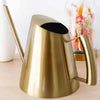
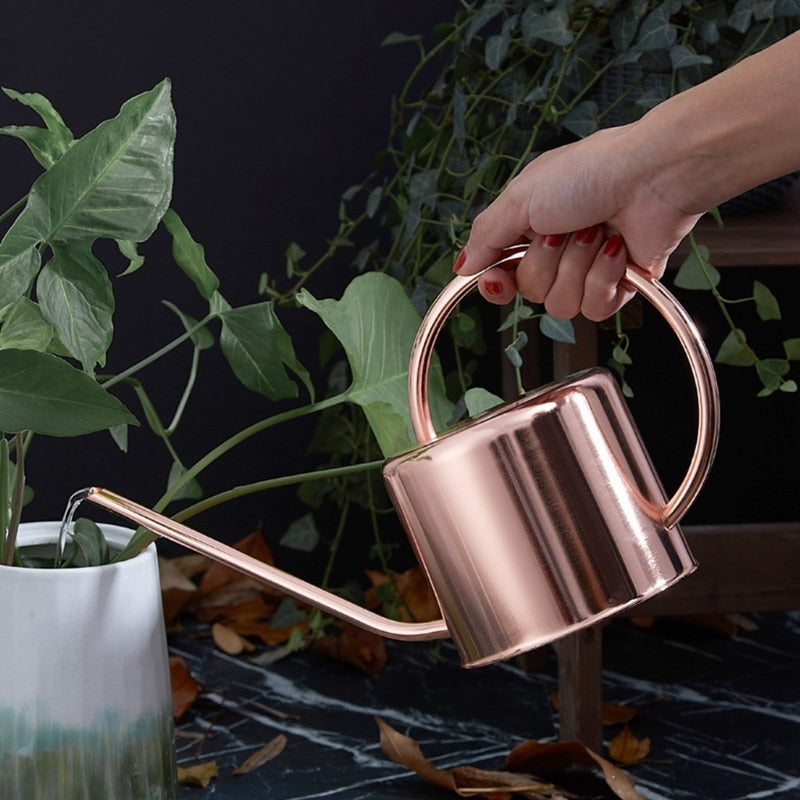
This shape comes from theJapanese watering cantraditional copper, used for Bonsai. The very long neck allows water to gain speed to create precise pressure.

The Copper Problem (and its solution)
The real Japanese copper watering can costs a fortune and oxidizes (turns green) if not polished weekly. That's why we created a modern version.
Japanese Style, without the maintenance
Find the aesthetic of copper and the precision of the long Japanese spout, but in Stainless Steel. It does not rust, does not tarnish, and remains affordable.
- ✨ Design:An art object for your living room.
- 🎯 Precision: Ideal for dense indoor plants.
4. Innovation: The Watering Can that works by itself
The story doesn't end there. Today, the watering can can be autonomous. This is the principle ofOllas (or Oyas).
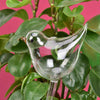
These are micro-porous terracotta reservoirs that are planted directly into the soil. Water slowly escapes through the wall, continuously hydrating the plant without excess. This is the most ecological and safest technique for your plants.
What's your style?
From the pragmatic gardener (Parisian) to the aesthete (Japanese), there is certainly a watering can for your practice.
Visit the shop
Despont
Beaucoup d’arrosoir « Parisien » (je n’ai jamais utilisé que ceux là) ont une contenance de 11 litres. Pourquoi cette contenance sommes tout particulière ?